
Explore key ethical theories and values in people practice, including utilitarianism, deontology, and their impact on HR decision-making. Features comprehensive video guide and practical examples for CIPD Level 5 professionals.
Introduction
In the field of people practice—encompassing human resources management, employee relations, and organisational development—ethical considerations play an important role in shaping policies, resolving conflicts, and building a positive workplace culture. Ethical perspectives provide frameworks for evaluating actions and decisions, ensuring they align with moral principles and organisational values. This article explores various ethical theories and values, including utilitarianism, deontology (or Kantianism), communitarianism, and altruism, alongside broader concepts such as ethics in religion and business. It also examines how these perspectives inform decision-making in people practice, using examples of ethical dilemmas, the influence of personal and religious beliefs, approaches to performance issues, and their impact on leadership styles and organisational culture. By understanding these elements, practitioners can make more informed, equitable, and compassionate choices that enhance employee wellbeing and organisational integrity.
Ethical Perspectives: Theories, Values, and Contexts
Ethical perspectives offer diverse lenses through which individuals and organisations can assess right and wrong. These frameworks are not mutually exclusive but often intersect, providing detailed guidance in complex situations.
Key Ethical Theories
Utilitarianism
This consequentialist theory, championed by philosophers like Jeremy Bentham and John Stuart Mill, posits that the morality of an action is determined by its outcomes, specifically the greatest happiness or utility for the greatest number. In essence, one should choose the option that maximises overall benefit while minimising harm. For instance, in people practice, a utilitarian approach might justify redundancies during economic downturns if they preserve the organisation's viability and secure jobs for the majority.
Deontology/Kantianism
In contrast to utilitarianism, deontology emphasises duty, rules, and intrinsic moral principles, regardless of consequences. Immanuel Kant's categorical imperative—acting only according to maxims that could become universal laws—underpins this view. Actions are ethical if they respect individuals as ends in themselves, not means to an end. In HR contexts, this might manifest in upholding employee rights, such as privacy, even if breaching them could yield short-term organisational gains.
Communitarianism
This perspective prioritises the community or group's wellbeing over individual rights, drawing from thinkers like Amitai Etzioni. It stresses shared values, social responsibilities, and the interdependence of individuals within society. In people practice, communitarianism could encourage policies that promote team cohesion and collective goals, such as inclusive decision-making processes that reflect the organisation's cultural norms.
Altruism
Rooted in selflessness, altruism involves acting for the benefit of others without expecting personal gain. Philosophers like Auguste Comte viewed it as the pinnacle of ethical behaviour. In workplaces, altruistic actions might include mentoring junior staff or advocating for underrepresented groups, building a supportive environment beyond mere obligation.
Ethical Values
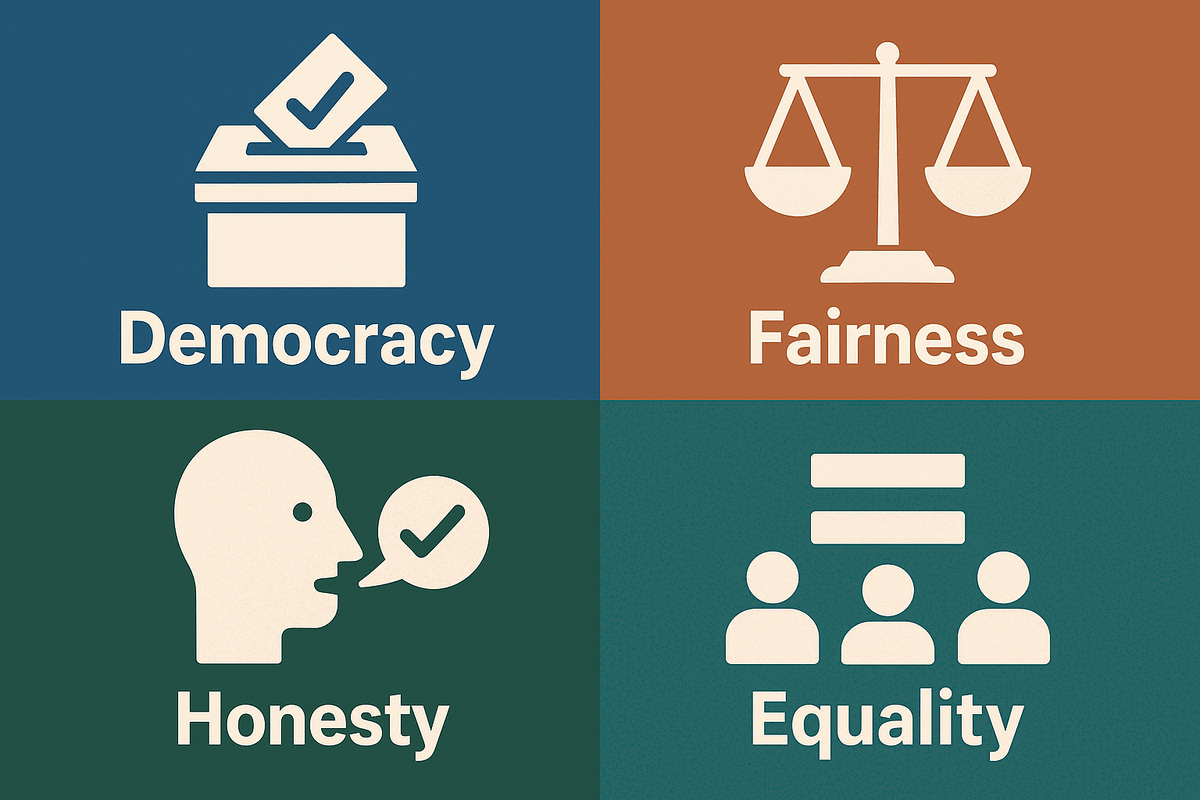
Core ethical values underpin these theories and guide behaviour in people practice:
- Democracy: Emphasises participation, equality in decision-making, and representation. In organisations, this value supports employee voice mechanisms, such as surveys or councils, ensuring diverse perspectives are heard.
- Fairness: Involves impartiality and justice, treating individuals equitably based on merit or need. It counters bias in recruitment, promotions, or disciplinary actions.
- Honesty: Demands truthfulness and transparency, building trust. For example, openly communicating organisational changes prevents rumours and maintains morale.
- Equality: Promotes equal opportunities and treatment, irrespective of gender, race, or other characteristics. This value drives diversity and inclusion initiatives, aiming to level the playing field.
Ethics and Religion
Religious ethics often intersect with secular frameworks, providing moral guidance drawn from sacred texts and traditions. For instance, Christianity's Golden Rule ("Do unto others as you would have them do unto you") aligns with deontological principles, while Islamic teachings on justice and compassion echo communitarian and altruistic values. In multicultural workplaces, religious ethics can influence practices like accommodating prayer times or dietary needs, promoting tolerance. However, conflicts may arise, such as when religious beliefs clash with organisational policies on LGBTQ+ rights, requiring careful navigation to uphold equality.
Ethics and Business
In the corporate world, ethics balance profit motives with moral responsibilities. Concepts like corporate social responsibility (CSR) integrate ethical values into business strategies, ensuring operations benefit stakeholders beyond shareholders. Ethical business practices might include fair wages, environmental sustainability, and anti-corruption measures. In people practice, this translates to ethical recruitment (avoiding exploitation) and transparent performance management, enhancing reputation and employee loyalty.
Examples of Ethical Dilemmas and Outcomes
Ethical dilemmas often involve competing values or theories, leading to varied outcomes:
- A manager discovers an employee falsifying timesheets. A utilitarian approach might consider the broader impact: if the employee is otherwise high-performing and the infraction minor, a warning could maximise utility by retaining talent. Conversely, a deontological stance would demand dismissal to uphold honesty as a universal rule, regardless of consequences.
- In a merger, HR must decide on staff reductions. Communitarianism might prioritise retaining long-serving employees to preserve community ties, while altruism could focus on supporting those most vulnerable through severance packages.
Outcomes depend on the chosen perspective: a punitive decision might deter future misconduct but erode trust, whereas a compassionate one could build loyalty but risk perceptions of leniency.
How Ethical Perspectives Influence Decision-Making in People Practice
Ethical perspectives do not merely describe morality; they actively shape decisions, particularly in high-stakes areas like employee management. By applying these frameworks, people practitioners can justify choices, anticipate impacts, and align actions with organisational values.
Examples of Ethical Dilemmas, Outcomes, and Rationales
Consider a dilemma where an employee reports harassment but requests confidentiality. A utilitarian rationale might weigh the greater good: investigating openly could protect others but harm the reporter's privacy, potentially leading to a mediated resolution that benefits the majority. A deontological approach, however, insists on duty to justice, mandating a full investigation irrespective of individual discomfort, with the outcome being formal sanctions to enforce rules.
Another example: during a pandemic, deciding on remote work policies. Altruism might prioritise employee health, allowing flexibility, while communitarianism focuses on maintaining team bonds through hybrid models. The rationale here is balancing individual safety with collective productivity, resulting in policies that enhance retention.
How Different Perspectives Result in Decisions
Perspectives can lead to divergent decisions in similar scenarios:
- Utilitarianism vs. Deontology: In pay equity audits, utilitarianism might accept minor disparities if they enable overall salary increases, maximising happiness. Deontology would reject this, insisting on absolute fairness as a moral imperative, potentially leading to comprehensive restructures.
- Impact of Religious and Personal Beliefs: Personal beliefs, influenced by religion, can sway workplace decisions. A manager with Buddhist principles of compassion might opt for restorative justice in misconduct cases, focusing on rehabilitation. Conversely, someone with strict Protestant work ethic views might emphasise accountability. In diverse teams, these beliefs must be managed to avoid bias, perhaps through ethics training that encourages reflection on how personal values align with organisational ones.
Approaches to Capability and Performance Issues
Ethical values inform responses to underperformance or capability gaps:
- Compassionate Approaches: Grounded in altruism and fairness, these involve supportive measures like training, mentoring, or adjustments for personal circumstances (e.g., mental health support). For instance, viewing poor performance through a communitarian lens might lead to team-based interventions, building a culture of mutual aid.
- Punitive Approaches: Aligned with deontology, these enforce rules strictly, such as warnings or dismissal, to uphold honesty and accountability. While effective for deterrence, they risk alienating staff if perceived as unfair.
Balancing these—perhaps using a hybrid model—depends on context: compassionate responses suit skill-based issues, while punitive ones address wilful misconduct.
Impact on Management and Leadership Styles, and Organisational Culture
Ethics profoundly shape leadership: a utilitarian leader might adopt a results-oriented style, prioritising efficiency, whereas a deontological one emphasises principled decision-making, modelling integrity. Communitarian leaders build collaborative cultures, promoting shared values through inclusive practices.
Consequently, these styles influence culture. An altruistic, compassionate approach cultivates a supportive environment, boosting engagement and innovation. In contrast, a punitive, rule-bound culture might ensure compliance but stifle creativity. Religious ethics can enrich culture by encouraging empathy, as in faith-based organisations, but require safeguards against exclusion.
Ultimately, integrating ethical perspectives into people practice builds resilient cultures where decisions are transparent, fair, and humane, leading to sustainable success.
Frequently Asked Questions
What are the main ethical theories in people practice?
Quick Answer: The main ethical theories in people practice include utilitarianism (maximising overall benefit), deontology (duty and rules), communitarianism (community wellbeing), and altruism (selfless actions for others). These frameworks help HR professionals evaluate decisions and ensure moral alignment with organisational values.
Utilitarianism focuses on outcomes that benefit the greatest number, such as justifying redundancies to save jobs overall. Deontology prioritises rules and duties, upholding rights regardless of consequences. Communitarianism emphasises group harmony, while altruism promotes selfless help. Together, they guide ethical HR practices.
How does utilitarianism apply to HR decision-making?
Quick Answer: Utilitarianism in HR focuses on outcomes that maximise happiness for the greatest number. For example, during redundancies, it might justify letting go of some staff to preserve jobs for most employees and maintain organisational viability, weighing overall benefits against individual harm.
This consequentialist approach evaluates actions by their results rather than intentions. In practice, HR might choose layoffs that protect the company's future, ensuring long-term stability for more people. However, it can sometimes overlook individual rights if the majority benefits.
What is deontology in people practice?
Quick Answer: Deontology emphasises moral rules and duties regardless of consequences. In HR, this means upholding employee rights like privacy or fairness in promotions, even if breaking rules might provide short-term gains, treating people as ends rather than means.
Based on Immanuel Kant's ideas, deontological ethics requires following universal principles. HR applications include maintaining confidentiality or ensuring equal treatment, building trust and integrity. It contrasts with outcome-focused theories by prioritising ethical consistency over results.
How do ethical values influence workplace decisions?
Quick Answer: Ethical values like fairness, honesty, equality, and democracy guide HR decisions by promoting impartial treatment, transparency, equal opportunities, and employee participation. These values help create inclusive policies and build trust in organisational practices.
Fairness ensures equitable processes in hiring and discipline. Honesty demands clear communication, while equality drives diversity initiatives. Democracy involves employee input in decisions. Together, they support ethical cultures that enhance wellbeing and organisational integrity.
What role do religious beliefs play in workplace ethics?
Quick Answer: Religious beliefs can influence workplace ethics through principles like compassion or justice from Christianity, Islam, or other faiths. In diverse workplaces, they may affect policies on accommodations but must balance with equality to avoid conflicts with organisational values.
Faith-based ethics often align with broader theories, such as the Golden Rule mirroring deontology. HR must accommodate religious needs like prayer breaks while ensuring inclusivity. Conflicts arise with issues like LGBTQ+ rights, requiring careful mediation to maintain harmony.
How should HR handle ethical dilemmas?
Quick Answer: HR should handle ethical dilemmas by applying frameworks like utilitarianism for outcomes or deontology for rules. Consider stakeholder impacts, seek advice, and document decisions to ensure transparency, fairness, and alignment with organisational values.
Start by identifying competing values and potential consequences. Consult ethics committees or legal experts if needed. Document rationales to demonstrate accountability. Training in ethical decision-making helps HR professionals navigate complex situations effectively.
What impact do ethical perspectives have on leadership styles?
Quick Answer: Ethical perspectives shape leadership by encouraging results-oriented (utilitarian), principled (deontological), collaborative (communitarian), or compassionate (altruistic) styles. These influence organisational culture, promoting either efficiency, integrity, inclusivity, or empathy.
Utilitarian leaders focus on outcomes, while deontological ones prioritise rules. Communitarian styles build community, and altruistic ones show care. Effective leaders balance these to create cultures that support employee growth and organisational goals.
How can organisations build an ethical culture?
Quick Answer: Organisations build ethical cultures by integrating values into policies, providing ethics training, encouraging open dialogue, and leading by example. This builds trust, employee wellbeing, and sustainable success through fair, transparent decision-making.
Implement codes of conduct, regular training sessions, and feedback mechanisms. Recognise ethical behaviour and address violations promptly. Leadership commitment is essential, as employees follow the example set by management in promoting integrity and fairness.
Conclusion
Ethical perspectives provide essential tools for navigating the complexities of people practice. By drawing on theories like utilitarianism and deontology, alongside values such as fairness and equality, practitioners can address dilemmas thoughtfully. Whether influenced by religion, business imperatives, or personal beliefs, these frameworks ensure decisions enhance individual dignity and organisational health. Embracing diverse approaches—compassionate yet accountable—builds ethical cultures that empower employees and drive long-term value. In an ever-evolving workplace, ongoing reflection on ethics remains essential for informed, influential decision-making.