What does CIPD stand for?
CIPD stands for the Chartered Institute of Personnel and Development. It is the professional body for HR and people development in the UK and has members across the world.
As a professional body, CIPD:
- Sets standards for HR and L&D practice
- Provides recognised professional qualifications
- Offers membership grades (e.g. Associate, Chartered Member, Chartered Fellow)
- Produces research, guidance, and tools for people professionals
When you see “CIPD qualified” on a job description, it usually means the employer would like candidates to hold a CIPD qualification at a particular level.
What is a CIPD qualification?
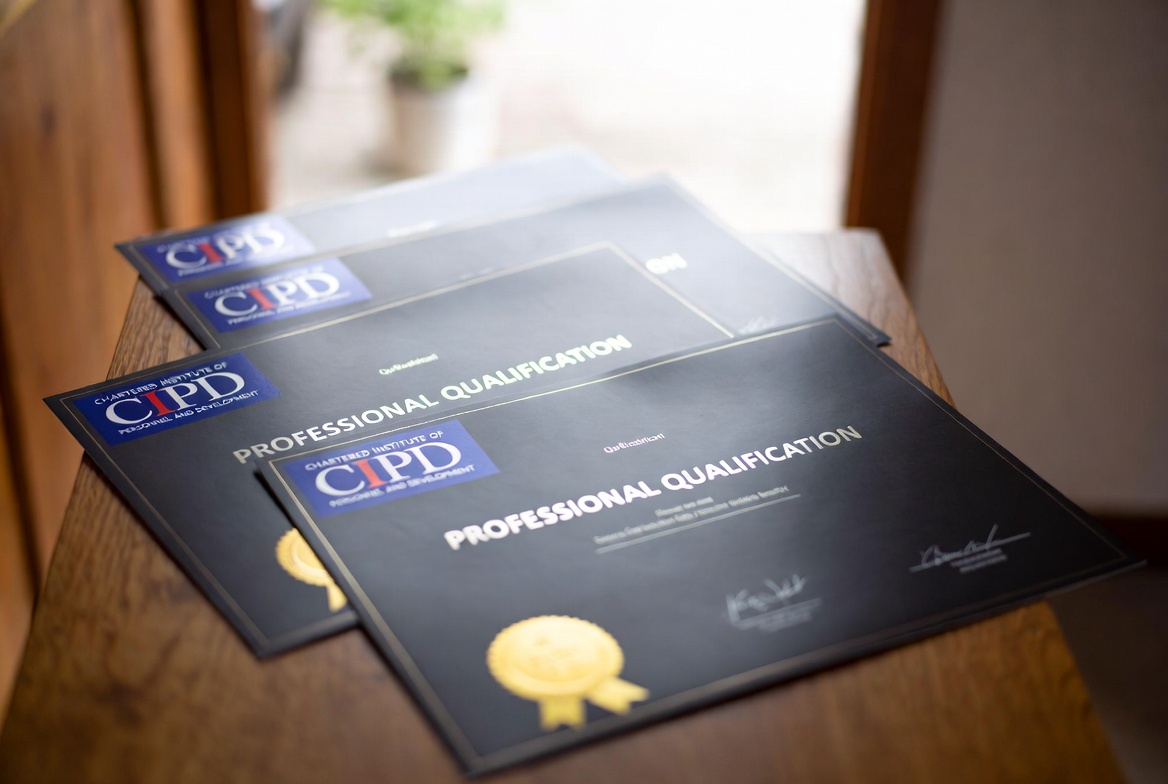
A CIPD qualification is a recognised course of study that develops your knowledge and skills in HR or Learning and Development. It shows employers that you have met a standard set by the professional body.
Currently, the most common levels are:
- CIPD Level 3 – Foundation level, often for people starting in HR or in junior roles
- CIPD Level 5 – Associate level, roughly equivalent to undergraduate study, aimed at people with some HR experience or responsibility
- CIPD Level 7 – Advanced level, similar to postgraduate study, for senior HR professionals and those moving towards strategic roles
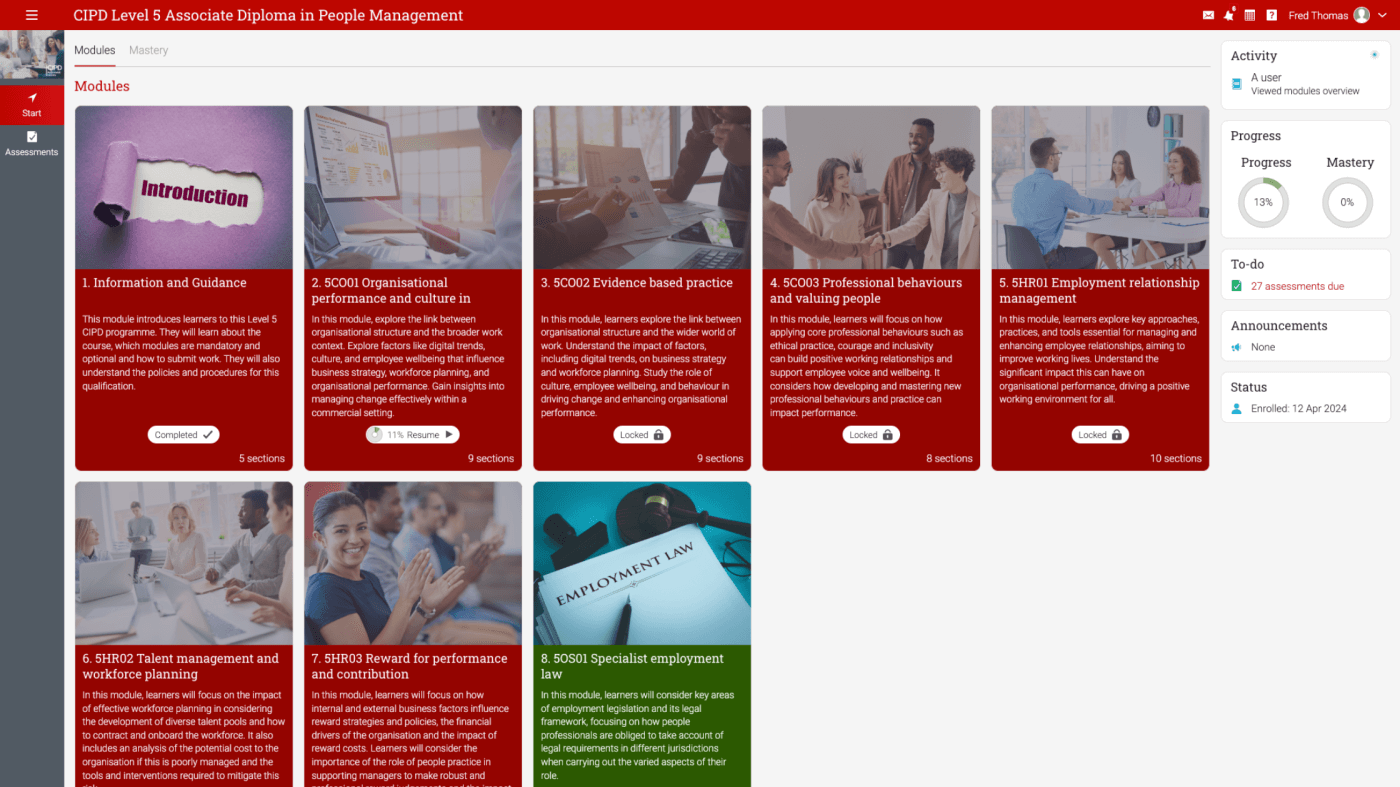
Each level includes several units, assessments and assignments that explore core HR topics such as employment law, reward, talent management and organisational performance. Learn more about Level 5
What does “CIPD qualified” actually mean?
Being “CIPD qualified” usually means you have completed a CIPD-accredited programme at a particular level and gained a corresponding membership grade.
For example:
- Completing Level 3 typically leads to Foundation Membership
- Completing Level 5 typically leads to Associate Membership (Assoc CIPD)
- Completing Level 7 can support progression towards Chartered Membership (Chartered MCIPD) once you also have relevant experience
For employers, this makes recruitment easier. They can see at a glance what your qualification level is and what kind of knowledge and capability they can expect.
Why do employers value CIPD?
Many HR roles either request or strongly prefer a CIPD qualification. Reasons include:
- Consistency of standards – a CIPD qualification shows you’ve been assessed against recognised criteria
- Up-to-date knowledge – programmes are designed around current legislation, research and good practice
- Commitment to the profession – studying a CIPD programme shows you are serious about developing as an HR professional
In competitive job markets, holding a relevant qualification can help your CV stand out.
Is CIPD only for people already working in HR?
Not at all. Many learners use a CIPD qualification to enter the profession.
- If you are new to HR or working in an admin role, CIPD Level 3 can help you build a foundation and move into a people-focused role.
- If you already have HR responsibilities and want to grow into an advisor or business partner role, CIPD Level 5 is often the logical next step.
- If you are working at a senior level or want to move into strategic HR leadership, CIPD Level 7 may be appropriate.
The right starting point depends on your experience, existing qualifications and career goals.
How do CIPD qualifications work in practice?
CIPD qualifications are delivered through approved providers. Depending on the provider, you may study:
- Online, in your own time
- Through blended learning, mixing online and tutor-led sessions
- In workshops or classrooms, either in person or virtually
Assessment is usually through written assignments, projects and case studies rather than traditional exams. This makes it easier to apply what you are learning directly to your organisation.
Is a CIPD qualification right for you?
If you are serious about building a long-term career in HR or people management, a CIPD qualification can be a powerful investment:
- It gives you a structured route to build your knowledge
- It supports your professional credibility with employers
- It gives you access to CIPD resources, research and membership networks
The main decision is which level to choose.
If you’re unsure whether CIPD Level 3, Level 5 or Level 7 is right for you, take a look at our guide to choosing the right CIPD qualification, or speak with a tutor who can talk through your experience and future plans.